
Modern medicine is wonderful. Life expectancy continues to grow around the world with most OECD countries now passing the 80 year mark. Infant mortality is at all-time lows and we’re rapidly discovering ways to deal with obesity, infectious disease, and perhaps even cancer.
This trend has coincided with a strong interest in wellness. People are drinking less, going to the gym more, and spending a lot more time obsessing over protein. We’ve even gotten to the point where the wealthy are thinking of ways to become immortal. The most famous example of this is, of course, Bryan Johnson. The billionaire founder of Venmo who made a name for himself after doing blood transfusions from his son. More importantly, Bryan Johnson lives a strict regimen where the goal is to slow down his speed of aging. His hope is to eventually defeat cheat death and, well, live forever.
I have no problem with this. I hope he succeeds and we all live happily ever after and never die.
But the realm of healthcare has counter-intuitive and unfortunate effects on the realm of politics. Let’s begin with exhibit A:
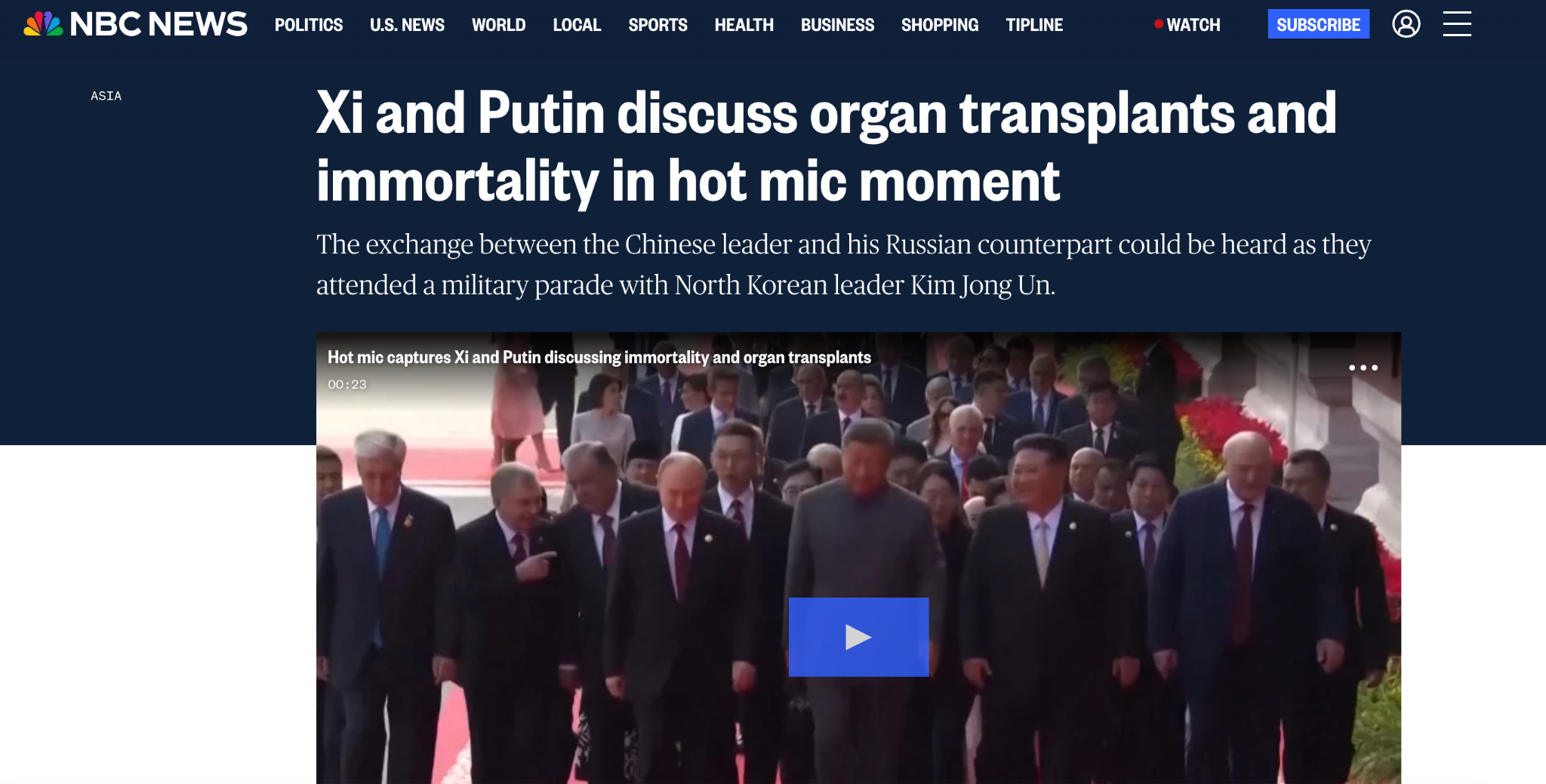
As you may realize, if Bryan Johnson and Substack/Twitter user @neocentrist are able to become immortal through a combination of high-tech solutions and lifestyle changes, the same interventions will doubtless be available to the numerous autocrats around the world. The likes of Putin, Xi, Kim, and Khamenei have access to far greater resources than any of us. They not only have $80 of yearly substack revenue (which I would love more of, by the way) or even a billion-dollar app they sold, but entire nation-states under their control. Chances are that they can achieve any longevity goal that’s feasible. Be it extending their lives to 150 or immortality.
This, I have a problem with.
Authoritarian systems are pretty messy to deal with as is. The primary way they collapse or improve is through the death of their leaders. Here you should be thinking of Stalin’s death carving the way for Khrushchev’s reforms or Mao’s death making it possible for China to eventually liberalize under Deng. When the strongman leader goes away, his previous subordinates are usually unable to wield the same power he did. The elites balance amongst themselves and create institutions to make sure that nobody else threatens them like the strongman did. Under certain circumstances, they are unable to coordinate and the public is actually able to ram democracy through. Well, sometimes that happens.
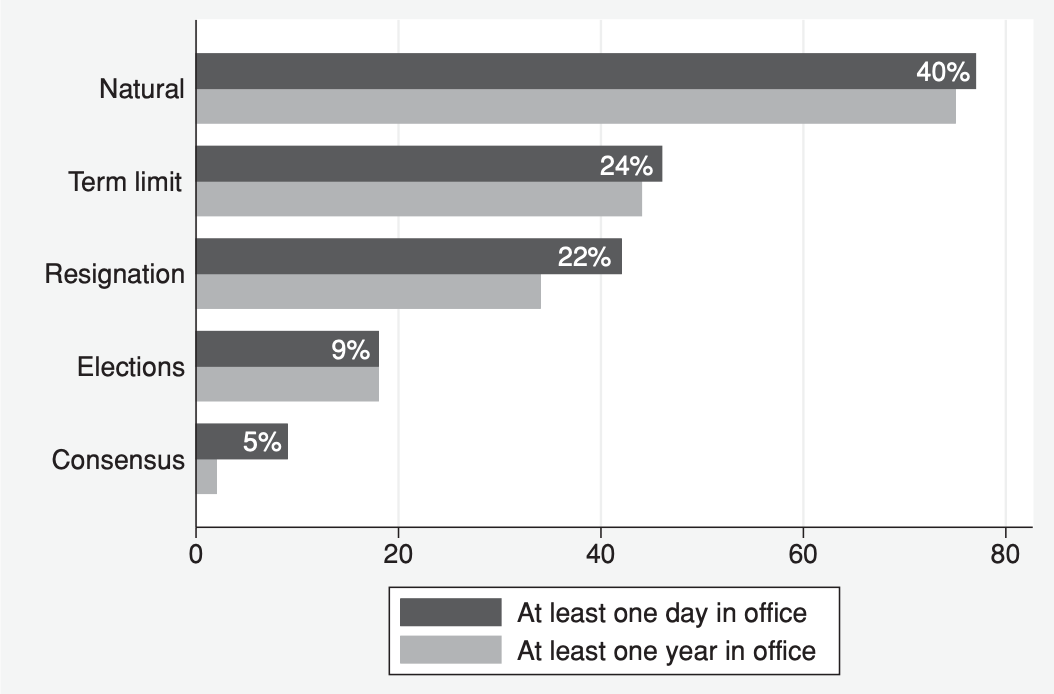
In fact, death is the normal form of power change under authoritarianism. 40% of leadership changes under autocracies occur when the leader dies. Another large chunk is leaders abiding by term limits or resigning because they feel too old to keep governing. In other words, the vast majority of leader turnover we observe today might simply end if modern medicine continues to improve at its current rapid pace.
So we have one huge problem: autocrats might not die anymore. And if they don’t die, the hopes of countries such as North Korea or China improving are slim to nil. Popular revolutions, despite what the Internet may lead you to believe, only account for about 10% of regime change in autocracies (and that conditional on the leadership change being non-procedural). So…what now?
Unfortunately, this is not the end of the story.
Longevity and modern medicine will not only stall the collapse of authoritarianism, but they are likely to help democratic backsliding as well. My older readers may remember my post from a year ago, where I explained that gerontocracy has the silver lining of making it unlikely that the ruler attempts to usurp more power. In other words, Donald Trump would have been far more likely to run for a third term if he were 50 years old. Trump’s age is the primary factor limiting the rise of authoritarianism in America today.
To understand this, note that the benefits of trying to usurp power are much larger for a 50 year old than an 80 year old. The 50 year old has another 30 years of uninterrupted rule ahead of him. In contrast, the 80 year old realizes that they’re going to be dead soon anyway and has far less to gain from ending American (or another country’s) democracy.
But what happens in a world where leaders expect to live until they’re 150? Or one where they expect to never die? You know the answer: the incentives towards becoming an autocrat rise. The Donald Trump of 2048 chooses to run for a third term.
This problem has no obvious solution. Medicine is rightfully uncompromising in its search for longevity. Likewise, there is no obvious fix to either stop democratic backsliding or get rid of authoritarians around the world. So it goes.